
SERP Insight Link Insertion | Smarter Link Building
Not every backlink starts with a new article. Sometimes, the best place for a backlink is a page that already exists. Imagine finding an article that people already read through Google. Instead of writing a new post, you simply add your link where it fits naturally. This is called SERP Insight Link Insertion.
It is a simple idea, but choosing the right page is the real job. A page with high traffic is not always the best choice. A page with the right topic is often more valuable. That is why SEO experts first study Google search results before placing a link.
In this guide, you will learn what SERP Insight Link Insertion is, how it works, why it matters, and how to find better link opportunities. By the end, you will know how to build links in a smarter and more natural way.
What Is SERP Insight Link Insertion?
SERP Insight Link Insertion means adding a backlink to an article that is already published.
The article may already be:
- Indexed by Google
- Ranking for useful keywords
- Receiving organic traffic
- Covering a topic related to your website
The editor updates the article and adds your link inside a relevant sentence or paragraph.
For example, imagine that you have written a guide about local SEO.
Another website has an article called:
“How Small Businesses Can Get More Customers”
The article includes a section about Google search visibility. Your local SEO guide may fit naturally inside that section.
The editor may add a sentence such as:
Following a clear local SEO checklist can help small businesses improve their visibility in nearby searches.
The words “local SEO checklist” may link to your guide.
SERPInsight, which is also the name of a link-building marketplace, defines link insertion as adding a link to an article that is already published and indexed. It also describes this service as a niche edit.
In this article, the phrase SERP Insight Link Insertion refers to using search-result data to choose a suitable page for this type of placement.
Why the “SERP Insight” Matters
SERP stands for Search Engine Results Page.
It is the page Google shows after someone enters a search.
For example, when a person searches for “best email marketing tips,” Google shows a list of pages. This list is the SERP.
SERP insight means studying those search results before choosing a link placement.
A link builder may check:
- Which pages rank for the target topic
- Which keywords each page ranks for
- Whether the page receives search traffic
- Whether its rankings are stable
- How closely the page matches the target website
- Whether the article is still useful
- Whether there is a natural place for the backlink
This removes some of the guesswork.
A website may have a strong backlink profile, but that does not mean every article on the site is strong.
One article may rank for hundreds of keywords. Another article on the same website may receive no search traffic.
SERP analysis helps you study the exact page where the backlink will appear.
Is SERP Insight Link Insertion Different from a Niche Edit?
SERP Insight Link Insertion and niche edits are very similar.
Both methods add a backlink to an existing article.
The main difference is how the article is selected.
A traditional niche edit may start with a list of websites. The link builder checks the websites and looks for a suitable article.
A SERP Insight Link Insertion often starts with a keyword or topic. The link builder studies ranking pages and checks their individual performance.
The final backlink placement is almost the same.
The publisher still:
- Opens an existing article.
- Finds a suitable section.
- Adds the backlink.
- Updates the page.
SERP Insight Link Insertion is not a completely new type of backlink. It is a more data-focused way to find niche edit opportunities.
SERP Insight Link Insertion vs Traditional Niche Edits
Both strategies use existing content, but their research methods can be different.
FeatureTraditional Niche EditSERP Insight Link InsertionStarting pointA website or publisher listA keyword or search resultMain focusWebsite-level authorityPage relevance and search dataNew article requiredNoNoLink added to existing contentYesYesPage-level reviewSometimesUsuallySERP researchLimitedImportantSearch visibility checkedNot alwaysUsually
Traditional Niche Edit
A traditional niche edit may follow these steps:
- Find a website in the right niche.
- Check its authority metrics.
- Search the website for an article.
- Contact the website owner.
- Request a backlink.
- Agree on the placement.
This process can work well when the selected article is relevant and useful.
The problem begins when a provider checks only the website and ignores the exact page.
A strong website may still contain:
- Outdated articles
- Pages with no traffic
- Thin content
- Unrelated posts
- Articles filled with paid links
The website’s overall score does not prove that every page is valuable.
SERP Insight Link Insertion
A SERP Insight Link Insertion may follow a different order:
- Choose a keyword or topic.
- Search for pages that cover that topic.
- Check the search performance of each page.
- Review the content carefully.
- Find a natural placement.
- Contact the publisher.
- Agree on the wording and anchor text.
- Monitor the link after publication.
This method gives more attention to the actual page.
Benefits of SERP Insight Link Insertion
SERP Insight Link Insertion may offer several benefits.
It uses content that already exists
You do not need to create a full article for every backlink.
The publisher updates an article that is already live.
It can save time
A guest post needs to be written, edited, approved, formatted, and published.
A link insertion may require only a small content update.
This does not mean every placement will be fast. The final delivery time depends on the publisher.
It supports better page selection
SERP data can show whether a page has search visibility.
You can review the page before choosing it instead of relying only on the website’s homepage or authority score.
It can provide strong topic relevance
A link can be placed inside a paragraph that closely matches your page.
This makes the link more useful for readers.
It may send referral visitors
People reading the host article may click the backlink and visit your website.
This can create value even when there is no clear ranking change.
It can support existing content
A relevant backlink may support a page that already has:
- Helpful information
- Good on-page SEO
- Search impressions
- Internal links
- Some keyword rankings
However, no backlink can guarantee better rankings.
Why Ranking Pages Can Be Better Link Opportunities
A page that ranks in search results has shown some level of relevance for a query.
It may have:
- Helpful content
- Existing backlinks
- Good internal links
- Clear topic coverage
- Search visibility
- Reader interest
This gives you more information to study.
However, a ranking page is not automatically a good link opportunity.
You must still check whether:
- The topic is relevant
- The content is accurate
- The page is still active
- The writing is clear
- The website looks trustworthy
- The page contains too many paid links
- Your resource would help the reader
A smaller, highly relevant page may be a better choice than a large but unrelated website.
Why Page-Level Metrics Matter
Many link builders use Domain Rating, also called DR, when checking websites.
DR is a third-party metric created by Ahrefs. It measures the strength of a website’s backlink profile compared with other websites in the Ahrefs database. It is not a Google score or a direct Google ranking factor.
DR can be useful for comparison, but it should not be used alone.
For example, a high-DR website may have an article that:
- Receives no traffic
- Ranks for no useful keywords
- Has not been updated for years
- Contains poor information
- Has many unnatural outbound links
A lower-DR website may have a highly useful article that ranks well for your exact topic.
For link insertions, check both the domain and the individual page.
Useful page-level signals include:
- Organic traffic
- Ranking keywords
- Ranking history
- Page backlinks
- Topic relevance
- Content quality
- Content freshness
- Number of outbound links
Metrics are helpful, but they are estimates. Always read the page yourself.
How SERP Insight Link Insertion Works
A simple SERP Insight Link Insertion campaign has five main stages:
- Find relevant pages.
- Check page quality.
- Find a natural link location.
- Choose suitable anchor text.
- Publish and monitor the link.
Let us look at each stage.
Stage 1: Find Pages That Already Rank in Google
Start with the main topic of your target page.
Suppose your website has a guide about technical SEO audits.
You may search for related terms such as:
- Technical SEO checklist
- Common technical SEO problems
- How to audit a website
- Website SEO mistakes
- Improve website crawlability
Study the pages that appear in the results.
Do not focus only on the first three results. Pages in lower positions may also be useful.
Ask these questions:
- Does the article cover a related topic?
- Does it serve the same type of reader?
- Is the content useful?
- Would my page add more information?
- Is there a clear place for the link?
- Does the website appear active?
Create a short list of the best pages.
Do not contact every website you find.
Stage 2: Evaluate the Individual Page
The next step is checking the quality of each page.
Do not approve a placement only because the website has a strong authority score.
Review the following signals.
Organic Traffic
Organic traffic means visitors who arrive through unpaid search results.
SEO tools can estimate how much organic traffic a page receives.
These estimates are not exact. They should be used as guides.
Look for:
- Stable traffic
- Growing traffic
- Traffic from relevant keywords
- Visitors from your target country
A page with low traffic is not always bad. It may rank for a small but highly relevant topic.
Relevance should remain the main goal.
Keyword Rankings
Check which keywords the page ranks for.
The keywords should match the main subject of the article.
For example, an article about dental marketing should rank for terms related to:
- Dental SEO
- Patient marketing
- Local search
- Dentist advertising
Be careful when a page receives most of its traffic from unrelated searches.
Ranking Stability
Check whether the page has stayed visible over time.
A stable page may be a safer choice than one with a very short traffic spike.
Possible warning signs include:
- A large traffic drop
- Loss of most ranking keywords
- Long periods with no visibility
- A sudden rise followed by a fast fall
A drop does not always mean the page is poor. Search demand may change, and SEO tools can update their data.
Look at the full picture.
Content Freshness
Read the article carefully.
Do not trust the displayed update date alone.
Check whether the page contains:
- Current information
- Working links
- Clear examples
- Accurate facts
- Useful images
- Good formatting
- No broken sections
An old article can still be useful when its information is correct.
A new date does not always mean the content is fresh.
Stage 3: Confirm a Natural Place for the Link
Not every relevant page has room for your backlink.
Your link must fit naturally inside the article.
Find the exact paragraph where your resource could help.
Ask:
- Does this paragraph match my page?
- Will the link answer a reader’s question?
- Does my page provide extra detail?
- Will the sentence remain clear?
- Does the link feel like a useful resource?
The backlink should improve the article.
It should not look like a random advertisement.
Prioritize Editorial Relevance
Editorial relevance means that the backlink makes sense in the content.
For example, a guide about website speed may fit inside an article about technical SEO.
The same guide would not fit naturally inside an article about cooking recipes.
A relevant placement helps:
- The reader
- The publisher
- The linked website
- The flow of the article
Choose relevance before a high metric.
Avoid Forced Link Placements
A forced placement sounds strange.
It may include:
- An unrelated sentence
- An awkward keyword
- Too many links in one paragraph
- A sudden sales message
- Poor grammar
- Information that does not help the reader
Here is a bad example:
Email marketing can help businesses grow. You can also buy the best accounting software here.
The accounting link does not match the topic.
Read the proposed sentence aloud. If it sounds unnatural, rewrite it or select another page.
Stage 4: Choose Natural Anchor Text
Anchor text is the clickable text of a link.
In the sentence below, “technical SEO guide” is the anchor text:
Use this technical SEO guide to find common website problems.
Anchor text should tell readers what they will find after clicking.
Google recommends using anchor text that is descriptive, reasonably short, and relevant to both pages.
Do not use the same commercial keyword for every backlink.
A natural link profile may include several anchor types.
Brand Anchors
A brand anchor uses the name of a company or website.
Examples:
- Ahrefs
- YourBrand
- YourBrand blog
- A guide from YourBrand
Brand anchors are common in normal editorial writing.
Partial-Match Anchors
A partial-match anchor includes part of the target keyword.
Examples:
- Easy technical SEO tips
- Guide to local search
- Ways to improve website speed
- Link-building ideas for startups
These phrases provide topic information without repeating an exact keyword.
Page-Title Anchors
A page-title anchor uses the title of the linked page.
Example:
Read “The Complete Technical SEO Checklist” for more details.
This can work well when the page title fits naturally into the sentence.
Generic Anchors
Generic anchors use simple words such as:
- Learn more
- Read the guide
- View the resource
- Find more details
Generic anchors can be useful, but they should not be overused.
The surrounding sentence should clearly explain the destination.
Naked URL Anchors
A naked URL uses the web address as the clickable text.
Examples:
- example.com
- www.example.com
- example.com/seo-guide
These are common in references, resource lists, and business profiles.
Avoid Over-Optimized Anchors
An over-optimized anchor repeats a commercial keyword too often.
Examples include:
- Buy cheap backlinks
- Best SEO agency
- Number one link-building service
- Cheapest guest post service
Instead, use a natural mix of:
- Brand names
- Page titles
- Partial-match phrases
- Topic phrases
- Generic anchors
- Plain URLs
The anchor must fit the sentence.
Stage 5: Publish and Monitor the Link
After the publisher adds the backlink, check the live page.
Make sure:
- The correct URL was added
- The anchor text is correct
- The link opens properly
- The paragraph reads naturally
- The link is visible
- The agreed link attribute is present
- The page is still accessible
Save the important details in a spreadsheet.
Record:
- Host website
- Live page URL
- Target URL
- Anchor text
- Publication date
- Link attribute
- Contact person
- Price paid
- Replacement terms
A backlink can be removed later.
The publisher may update the article, delete the page, change the URL, or remove the link.
Regular monitoring helps you find these changes.
Where Should the Link Be Placed?
The backlink should normally appear inside the main article.
A link inside a relevant paragraph is called a contextual link.
Contextual placements are usually more useful for readers than links placed in:
- Footers
- Sidebars
- Author bios
- Comment sections
- Random link lists
- Hidden sections
The link does not need to appear in the first paragraph.
The best position is the place where the reader needs the extra resource.
How to Measure the Success of a Link Insertion
Do not measure success only by counting backlinks.
Use several signals.
Check whether the link remains live
A link that disappears quickly offers little long-term value.
Monitor important placements.
Track keyword visibility
Record the target page’s rankings before the link goes live.
Check the rankings again over time.
Do not assume that every change was caused by one backlink. Rankings can change because of:
- Content updates
- Competitor activity
- Search demand
- Internal links
- Technical fixes
- Google system updates
Track organic traffic
Use Google Search Console or your analytics platform.
Review:
- Search clicks
- Search impressions
- Click-through rate
- Landing-page traffic
Look at the wider trend instead of one day.
Track referral traffic
Referral traffic comes from people who click the backlink.
A link that sends useful visitors can provide value even without a clear ranking increase.
Track business results
Depending on your website, useful results may include:
- Leads
- Phone calls
- Email sign-ups
- Product sales
- Trial accounts
- Booked meetings
SEO should support a real business goal.
Best Practices for SERP Insight Link Insertions
Follow these rules when building links:
- Choose relevance before authority.
- Check the exact page.
- Read the full article.
- Review the page’s search history.
- Find a natural placement.
- Use clear anchor text.
- Avoid repeated exact-match keywords.
- Check the website’s overall quality.
- Ask about link attributes.
- Keep a record of every placement.
- Monitor important backlinks.
- Build links at a steady pace.
- Continue improving your target page.
- Use more than one link-building method.
- Focus on quality instead of quantity.
A small number of useful links can be better than many weak placements.
Common Link Insertion Mistakes to Avoid
Checking only Domain Rating
A strong DR does not prove that the selected page is useful or relevant.
Ignoring the topic
A backlink from an unrelated article may confuse readers and look forced.
Choosing only by price
A cheap link is not always bad, and an expensive link is not always good.
Study the page before paying.
Repeating the same anchor text
Using one commercial keyword again and again can create an unnatural pattern.
Forcing the link into the content
The placement should improve the article.
Do not add a sentence only to hold a backlink.
Ignoring link attributes
Ask whether the link will use:
- A regular link
- rel=”sponsored”
- rel=”nofollow”
This is especially important when money or another benefit is exchanged.
Expecting guaranteed results
No provider can promise a specific Google ranking.
A backlink is only one part of SEO.
Forgetting on-page SEO
Backlinks cannot fix a weak page with poor content, slow loading, or unclear search intent.
Failing to monitor the placement
Links and pages can change.
Keep records and review important links.
How Much Does SERP Insight Link Insertion Cost?
There is no standard price.
The cost can depend on:
- Website quality
- Page traffic
- Topic or niche
- Search visibility
- Publisher rules
- Editorial work
- Outreach effort
- Link location
- Link attribute
- Replacement policy
Some marketplaces offer low-cost listings. Manual editorial outreach can cost much more.
Do not use price as the only quality signal.
Before paying, check:
- The exact page
- Topic relevance
- Organic visibility
- Content quality
- Outbound links
- Link location
- Publisher transparency
- Removal terms
Avoid articles that claim every link insertion falls inside one fixed price range.
The market can vary widely.
Are Link Insertions Cheaper Than Guest Posts?
Link insertions can cost less than guest posts because no full article needs to be created.
A guest post may require:
- Topic research
- Writing
- Editing
- Images
- Publisher review
- Formatting
- Publication
A link insertion updates a page that already exists.
However, a placement on a strong ranking page may cost more than a guest post on a small website.
Compare the value, not only the price.
How Long Does It Take to See Results?
There is no fixed timeline.
Google first needs to find and process the updated page.
The effect of a backlink can depend on:
- The linking page
- Your target page
- Keyword competition
- Search intent
- Your existing backlinks
- Internal links
- Website quality
- Technical SEO
- Other search changes
Some links may support growth over time.
Other links may produce no clear ranking change.
Do not treat link insertion as an instant ranking tool.
Why On-Page SEO Still Matters
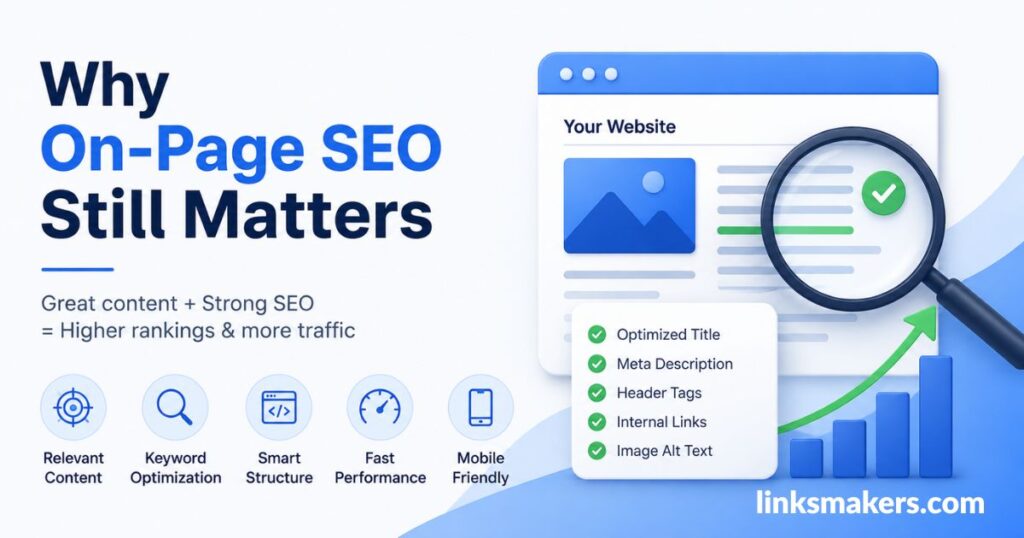
A backlink works best when the target page is already useful.
Before building links, check whether your page has:
- A clear title
- A useful introduction
- Helpful information
- Simple headings
- Short paragraphs
- Original examples
- Related internal links
- Fast loading
- Mobile-friendly design
- A clear next step
The page should match what the searcher wants.
Backlinks can support a strong page. They cannot replace helpful content.
Google’s Position on Link Insertions
Google does not have a special policy called “SERP Insight Link Insertion.”
Google looks at why a link was added and how it was handled.
Google’s spam policies list buying or selling links for ranking purposes as link spam. This can include exchanging money, goods, or services for links that are intended to influence rankings.
When a link is part of an advertisement, sponsorship, or paid placement, Google recommends marking it with rel=”sponsored”. The nofollow value can also be used.
A link can be relevant and still be paid.
Relevance does not remove the need for proper disclosure.
Editorial Links vs Paid Link Placements
Editorial Link Insertions
An editorial link is added because the editor believes it helps the reader.
It may:
- Support a fact
- Credit a source
- Provide an example
- Link to original research
- Explain a topic in more detail
- Recommend a useful resource
The editor chooses the link because of its value.
Paid Link Insertions
A paid link insertion involves money, a product, a service, or another benefit.
Paid promotion is not automatically forbidden.
However, paid links should be qualified correctly and should not be used as hidden tools for manipulating rankings.
Before purchasing a placement, ask:
- Is the placement paid?
- Which link attribute will be used?
- Will the publisher review my page?
- Does the link help the reader?
- Is the relationship handled clearly?
How to Evaluate a Link Insertion Provider
A provider may help with:
- Page research
- Publisher outreach
- Negotiation
- Anchor-text selection
- Placement checking
- Link monitoring
A good provider should explain:
- How websites are selected
- How individual pages are checked
- Which metrics are used
- Where the link will appear
- How anchor text is chosen
- Which link attribute will be used
- What happens if the link is removed
- How placements are reported
Be careful when a provider promises:
- Guaranteed rankings
- Instant traffic
- A fixed ranking increase
- Hundreds of links in a few days
- Secret placements that cannot be reviewed
- Permanent links with no conditions
No provider controls Google’s rankings.
Five Questions to Ask Before Buying a Link Insertion
1. Can I Review the Target Page?
Try to see the exact page before approving the placement.
Check:
- Relevance
- Writing quality
- Search visibility
- Outbound links
- Article topic
- Website quality
2. Can You Share Page-Level Metrics?
Ask for information about the actual article.
Useful data may include:
- Estimated organic traffic
- Ranking keywords
- Traffic trend
- Page backlinks
- Main ranking country
Remember that third-party data is estimated.
3. Where Will the Link Be Added?
Ask to review the paragraph.
The link should appear inside relevant main content.
Avoid hidden, unrelated, or sitewide placements.
4. Can We Choose Natural Anchor Text?
The anchor should fit the publisher’s sentence.
Do not force an exact-match keyword when a brand name or natural phrase works better.
5. What Happens if the Link Is Removed?
Ask about:
- Monitoring
- Replacement period
- Refund terms
- Page deletion
- URL changes
- Link-attribute changes
Do not assume that “permanent” means forever.
When SERP Insight Link Insertions Make Sense
This strategy may make sense when:
- You already have helpful content
- Your target page is indexed
- Your page matches search intent
- You need relevant contextual links
- Your website has good technical health
- You can review placement quality
- You have clear campaign goals
- You are ready to monitor links
It may be useful for:
- Detailed guides
- Service pages
- Original research
- Free tools
- Industry reports
- Product comparisons
- Helpful tutorials
When This Strategy May Not Be Right
Link insertion may not be the best first step when:
- Your website is new and nearly empty
- Your content is thin
- Your website has technical problems
- The target page is not indexed
- The page does not match search intent
- Your internal linking is weak
- You cannot review the placement
- You expect instant rankings
In these cases, improve your own website before buying more links.
Build the Foundation Before Scaling Links
Backlinks can support a useful website.
They cannot replace one.
Before scaling a campaign, work on:
- Helpful content
- Topic coverage
- Technical SEO
- Internal linking
- Page speed
- Mobile usability
- Clear navigation
- User experience
- Trust signals
Think of backlinks as fuel.
Fuel can help a good car move. It cannot repair a broken engine.
SERP Insight Link Insertion vs Other Strategies
StrategyBest UseNew Content RequiredLevel of ControlSERP Insight Link InsertionAdding links to relevant ranking contentNoMediumTraditional Niche EditAdding links to existing articlesNoMediumGuest PostingPublishing a complete new articleYesHighDigital PREarning news and brand mentionsSometimesLowJournalist OutreachProviding expert quotesUsually noLowBroken Link BuildingReplacing dead links with useful resourcesSometimesMediumResource-Page OutreachGetting listed on useful resource pagesNoLow
No method is best for every campaign.
A balanced strategy may use several methods.
Choosing the Right Strategy
Choose SERP Insight Link Insertion when:
- You have a strong target page.
- You want a link from existing content.
- You can find a closely related article.
- You want to use page-level search data.
Choose guest posting when:
- You want to control the full article.
- You want to cover a new topic.
- You want brand exposure.
- You want a relationship with a publisher.
Choose digital PR when:
- You have original data.
- You have an important story.
- You are launching something new.
- You want media coverage.
The right choice depends on your goal, content, budget, and risk level.
Frequently Asked Questions
Can I Perform SERP Insight Link Insertion Without an Agency?
Yes.
You can research pages, contact publishers, discuss placements, and monitor links yourself.
However, manual research and outreach can take time.
What Tools Can Help with Link Insertion?
Useful tools may include:
- Keyword research tools
- Backlink analysis tools
- Rank trackers
- Outreach platforms
- Email-finding tools
- Google Search Console
- Spreadsheets
Tools provide data, but you should still read every page yourself.
Does This Strategy Work for New Websites?
It can, but a new website should first build a strong content foundation.
Create helpful pages, fix technical issues, and improve internal links before spending heavily on backlinks.
What Anchor Text Works Best?
The best anchor text is clear, relevant, and natural.
Use a mix of:
- Brand anchors
- Page titles
- Partial-match phrases
- Natural topic phrases
- Generic anchors
- Plain URLs
Do not repeat the same keyword for every backlink.
How Many Link Insertions Should I Build?
There is no fixed number.
The right amount depends on:
- Your niche
- Competition
- Website quality
- Existing backlinks
- Content
- Budget
- Goals
Start with a small number of relevant placements and measure the results.
Are Link Insertions Better Than Guest Posts?
Neither option is always better.
Link insertions use existing content and may require less work.
Guest posts create a new article and give you more control over the topic.
Many campaigns use both methods.
Can a Link Insertion Guarantee Better Rankings?
No.
No backlink can guarantee a specific ranking.
Results depend on many factors, including content quality, search intent, competition, technical SEO, and the wider backlink profile.
Final Thoughts
SERP Insight Link Insertion is a simple way to build backlinks, but it works best when you choose the right page. A good placement is not only about high authority or traffic. It should also match your topic and help the reader.
Before adding a link, take time to check the page, its content, and where your link will fit naturally. This small step can make a big difference. At the same time, remember that backlinks are only one part of SEO. Helpful content, a fast website, and a good user experience are just as important.
When you focus on quality instead of quantity, your SEO strategy becomes stronger over time. Use SERP Insight Link Insertion wisely, keep your links natural, and always aim to provide real value to your readers.
